
The Community-Engaged Digital Storytelling (CEDST) Lab is dedicated to advancing non-extractive and non-intrusive community-engaged media production approaches. At the heart of this initiative is a commitment to collaborative, ethical, and meaningful engagements for the communities. The projects are expected to use digital storytelling methods that are culturally responsive, grounded in respect, and foster community agency.
Guiding Principles of Ethical Community-Engaged Digital Storytelling.
Our members uphold these principles as core ethical commitments in community-engaged digital storytelling, adhering to them not only as methodological guidelines but also as fundamental values for community engagements.
- Non-Extractive: Avoiding the extraction and exploitation of stories or participants.
- Non-intrusive: Respecting boundaries, privacy, and cultural sensitivities.
- Community-Engaged: Prioritizing community voices for meaningful engagements.
- Media production: Honoring the creative process and output as co-created narrative labor
Activities range from building community partnerships, collaborating with community partners on photography, storytelling, podcasts, video production, community screenings, and impact assessments, to offering insights into best practices and future directions in digital storytelling. We also engage with specific ethical considerations in areas such as story selection, adapting production techniques to cultural contexts, sound editing, and creating powerful and authentic digital stories, all while avoiding exploitation or misrepresentation.
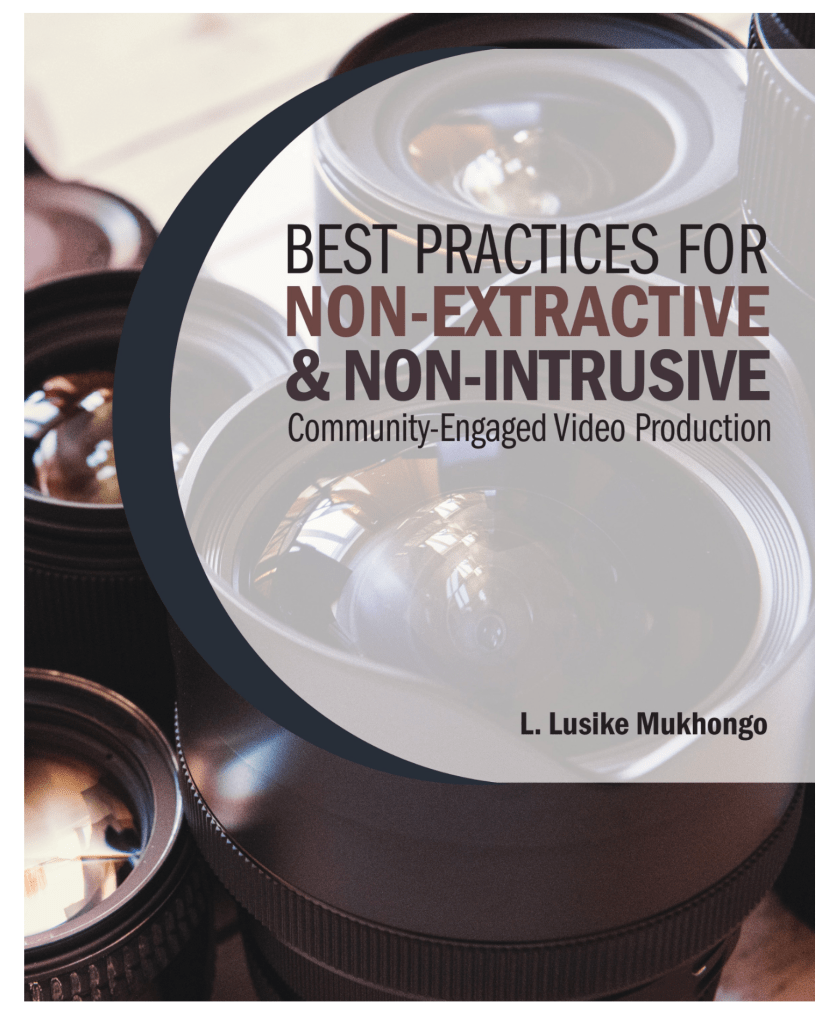
Recent projects by members of this collective include a digital storytelling initiative on Non-Extractive and Non-Intrusive Community-Engaged Media Production, which includes a guide on best practices for non-extractive and non-intrusive community-engaged video production.
Members are also working on a docuseries at the pre-production stage titled Sites, Practices, and Languages that explores the deep connections between heritage sites, cultural traditions, and linguistic communities, highlighting how place, practice, and language shape collective memory, identity, and belonging. Through interviews, archival footage, and on-location storytelling, the series documents efforts to preserve endangered languages, protect sacred and historical sites, and sustain cultural practices that have been passed down through generations. It invites viewers to consider how communities resist erasure and reclaim their heritage in the face of modernization, displacement, and historical injustice.
The lab has developed and follows a guide that outlines principles for non-extractive, community-engaged media production, providing checklists and toolkits for other researchers doing community-based research. We also offer practical tools for media producers, researchers, and artists seeking to co-create authentic, impactful digital stories that support community-led change and uphold principles of equity, representation, and accountability.
Some of the recommended guides and checklists include the following:
The intricate power dynamics in storytelling are explored, arguing for the need to navigate these dynamics ethically and ensure that the stories are narrated from the perspective of the community members themselves. This informed the need for ethical considerations to extend beyond filming into the post-production phase, with detailed discussions and feedback from the community to prioritize the authenticity and integrity of the stories.
Non-extractive digital storytelling transforms data into dialogue, platforms into partnerships, and audiences into co-creators of meaning.
 Participatory Media Cultures
You must be logged in to post a comment.